
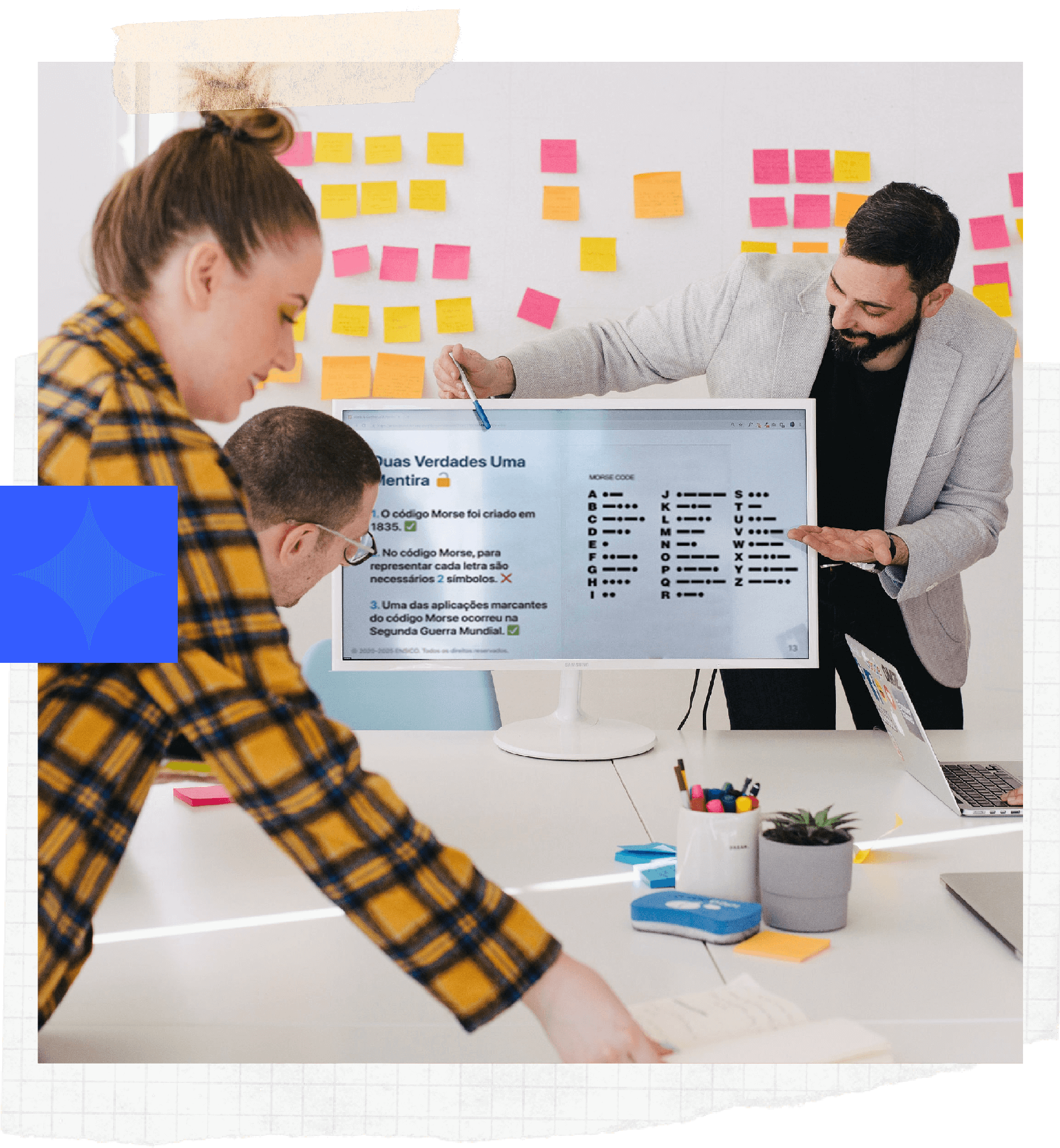

First Cycle
Ages 6 to 9
The learning starts through stories with captivating characters that implicitly link to computing subjects. These characters create emotional connections with the students that allow for the exploration of computational themes in a funny and pedagogically effective way.
In the final two years of the first cycle, the aim is to leverage the teaching of computing in the learning of Mathematics and Portuguese.
In the final two years of the first cycle, the aim is to leverage the teaching of computing in the learning of Mathematics and Portuguese.
First Cycle
Second Cycle
Ages 10 to 11
The second cycle further integrates computing with the study of mathematics and languages. It delves into linguistic concepts essential for mastering the native language and mathematical terminology, laying the groundwork for programming.
Building on their initial computer experiences from the first cycle, students progress to creating their first data models and algorithms.
Building on their initial computer experiences from the first cycle, students progress to creating their first data models and algorithms.
Second Cycle
Third Cycle
Ages 12 to 14
The third cycle aims to consolidate learning going deeper into the function concept alongside the math curriculum, which begins the study of functions at this stage. Consequently, the functional programming paradigm is deliberately embraced.
The frequency of semi-plugged and plugged classes increases, eventually leading up to the beginning of collaborative programming activities and the adoption of multi-paradigm programming languages such as F# and Python.
The frequency of semi-plugged and plugged classes increases, eventually leading up to the beginning of collaborative programming activities and the adoption of multi-paradigm programming languages such as F# and Python.
Third Cycle
Secondary
Ages 15 to 17
ENSICO’s plans at this level are to emphasize the study and exploration of computationally significant fields, including Cybersecurity, Artificial Intelligence, Big Data, the Internet of Things, Blockchain, and more.
This exploration is facilitated by advanced programming environments and languages endowed with extensive and educationally valuable libraries, such as Python. At this stage, one should aim to expand and develop domain-oriented specialised modules in collaboration with various universities, which will be available to students as elective courses tailored to their personal and professional interests.

This exploration is facilitated by advanced programming environments and languages endowed with extensive and educationally valuable libraries, such as Python. At this stage, one should aim to expand and develop domain-oriented specialised modules in collaboration with various universities, which will be available to students as elective courses tailored to their personal and professional interests.
Secondary